Thursday, February 26, 2015

Domestic Violence

“Has he ever trapped you in a room and not let you out?Has he ever raised a fist as if he were going to hit you?Has he ever thrown an object that hit you or nearly did?Has he ever held you down or grabbed you to restrain you?Has he ever shoved, poked, or grabbed you?Has he ever threatened to hurt you?If the answer to any of these questions is yes, then we can stop wondering whether he’ll ever be violent; he already has been.”
― Lundy Bancroft
Does this poem sound familiar to you? Have you ever seen anyone acting like "he" in the poem? Have YOU ever acted like "he" in the poem?

Domestic violence has been serious problem for a long time. According to United States Department of Justice, domestic violence is "a pattern of abusive behavior in any relationship that is used by one partner to gain or maintain power and control over another intimate partner." In simpler words, it is domestic violence when you see a family member harming another family member. Domestic violence can be either physical, sexual, economic, emotional, or psychological. 

What are effects of domestic violence? I don't know... What happen to your body when I hit you? Scratch, bruise, cut? What happen to your mind when I threaten you? Fear, depression? The effects of domestic violence are far beyond obvious! 

So why, why would a husband want to hurt his wife? Why would a parent want to hurt his/her own child? There are many factors. Internal factors include but do not limit to anger, low esteem, jealousy, and eagerness to control. External factors include but do not limit to stress, economic difficulty, illnesses.

How can YOU solve this problem? 
If you are the violent one, well, your only job is getting your **** together.
Unfortunately, it is not that simple if you are the victim. Since domestic violence occurs within a family, it is a sensitive topic to talk about. However, for your one good, you need to reach out for help, call authorized people and report your problems.
If you belong to lucky part of the world who don't have to deal with domestic violence directly, you should protect the victim, and organize a good community to prevent domestic violence in the first place.
“Never let a man put his hands on you without your permission.” 
― Melda Beaty 

Sunday, February 8, 2015

Orphanage Visit

It's a blessing to be able to help others. We, the members of 21 Issues Class, fortunately had that blessing. On Saturday, the eighth day of February, we visited 2 orphanages and 3 old people's home.
Of course, nothing can be done without preparation. Getting the donation is an first essential step. The process started at the beginning of term 2, which was about November. We had small calls instead of one big call. Firstly, we called for money donation competition between houses. The rule was donating for the LOSING house. So, with the aggressive competitive nature, members of houses donated a lot to the house they hated. It was a slightly evil plan, but for greater purposes. The second call was for food, for example, canned food.
After getting donation, we needed to contact the local organization. We contacted some places and asked for some helps (especially from Ms. Van Anh). Finally, we ended up with a list of 5 places.
8:00 AM, Saturday, 8 February 2015, I arrived at school. Mr. and Mrs. Swanson had already been there with some students. We started loading food on the waiting school bus. I hated morning hard work, but it was for greater purposes.
We drove to the first Orphanage on Hai Ba Trung Street - Thao Dan Orphanage. The kids were really friendly. They were probably used to visits like this. We sang, danced, and played games. In the second orphanage, we had a chance to see the kids' sleeping place. The twisting stair leading to sleeping place had very high steps. I wondered how little kids could use it. Probably they had to. There were hard metal beds with only wooden mats covering and some pillows. The kids had to get used to that harsh conditions, too. I felt lucky...
We then visited one old women's house, if her house can be classified as "a house". There was no door or wall. Sticks were held to stand the tole cover. I couldn't fit the "house": it was about 1m50 high. There was a small TV, and some fundamental pieces of equipment.
Then we visited other houses, but I didn't went inside because the houses were too small. It wasn't necessary, either.
After the visit, something inside me changed, something small and subtle. Without know what it is, I know it was there...

Tuesday, February 3, 2015

Energy and Environment

Twenty-first century is the era of energy wars. People are fighting for energy supplies. Oil and natural gas are top concerns, origins of many human conflicts. However, energy create not only conflicts, but also environmental problems. We are fighting to get things that give us instant wealth and gradual death. 

Oil and natural gas are classified as nonrenewable energy resources. These are widely exploited and used because they are CHEAP and ACCESSIBLE. However, the name explains itself: nonrenewable energy resources cannot be replaced, therefore have limited amounts. For example, remaining oil can be used in 50 years, and natural gas can last only for 75 years. Someday, when nonrenewable energy resources are deplete, we may die in the darkness. Moreover, the use of nonrenewable energy releases harmful atmospheric pollutants (greenhouse gas) and dangerous chemicals (nuclear power byproducts) to environment. Nonrenewable energy resources are both life-saving and life-stealing. 

So, is there a better alternative? 

Renewable energy resources are resources that can replenish quickly and be able to used again. Some common ones are sunlight, wind, and hydroelectic power. Sun gives us energy as light. Eventually, sun will burn out, but it will take about 6 billion years (UniverseToday), a very long time. Wind is used as a source of kinetic energy to turn the turbines, produce electricity. Hydroelectic power dam uses the same princible. Thesefriendly resources seem to be the permenant for both energy wars and environmentals problems. However, these resources have one disadvantage. Although most of them are free, building infrastructure to use them COST A LOT. Buying a solar panel system is quite expensive to some people. Although they will save money in the future, not many people can afford such a huge amount of money at one time. Building wind turbines and hydroeletic dam is expensive. Therefore, these resources are not widely in use.

If we cannot afford the infrastucture for renewable energy, how can we save nonrenewable energy until we find a better solution? Here are some simple tips:
- Unplug seldom-used appliances.
- Turn off computer instead of sleep if possible.
- Turn off light when going out.
- Use compact fluorescent bulbs instead of incandescent bulbs. 

Thursday, January 29, 2015

Near Earth objects

Imagine: One day, you are happily walking on a street, and the last thing you see is the sky getting dark. Why do you die?
Probably, there things above your head that can kill you. Those things are called "Near Earth Objects".
"Near Earth Objects. Near-Earth Objects (NEOs) are comets and asteroids that have been nudged by the gravitational attraction of nearby planets into orbits that allow them to enter the Earth's neighborhood."
NASA

According to "Earth Impact Effects Program", an 7-meter-diameter asteroid can hit the Earth with energy of Little Boy, an atomic bomb dropped during Word War 2. NEOs hit the Earth everyday. However, since most of asteroids are not really big, they get broken during their way.

-Why should we care about it? 
-None of us will survive if struck by a NEO that is large enough to pass through the atmosphere.
- Why should we care, since we can do nothing because NEOs are far away from our reach and too many to destroy?
- Well, there is always something you can do. First, pray. In case praying doesn't work, there is a temporary solution. Spacecrafts can be sent to calculate and deflect the path of NEOs. However, there is no permanent solution. We are safe, for now.

"It’s simply a question of when, not if, a NEO collides with the Earth."
Professor Monica Grady

Thursday, January 15, 2015

Racism

What define people? Their actions or their skin colors?

Racism is the belief that one race is superior to another race. Where does this belief come from?
Xenophobia is one natural factor. People are afraid of who are different from them (different skin or hair color for example).
Another factor is the history of colonization. For instance, Africans used to be colonized by Europeans. Although black people have gained their freedom, the "idea" of colonizing is still around in modern world as an excuse for white people to classify themselves as "superior species".
The racial "stereotypes" have horrible effects.
"Racism can have a lot of effects on a victim. Victims can become angry, bitter or violent. It can destroy a person’s self esteem. It can destroy communities and creates divisions within society."
 

If you are a victim of racism
What you SHOULD do:
1. You can report that to someone who has authority because racism is not legal in modern world.
2. You can stay calm and relaxed.
3. You can ignore them because the more angry you are, the more happy racist will be.
What you SHOULD NOT do:
1. Get angry and pay back.
2. Get depressed.

Thursday, December 18, 2014

Corruption

"You drove on the wrong lane," says the man in pale yellow uniform, "Show me your license!"
"Oh," the smiling short man hands his license, "Here, officer."
The officer takes and looks at the license, then put some green paper under the license into his pocket. "Ok", the officer gives the man back his license, "I'll let you go this time."


The short story above may be true, may be not. However, corruption is an obvious issue around the world. Although there are many types of corruptions (petty, grand, systemic), defined based on situations, corruption, in general, is the use of money to illegally obtain something, whether in large scale or small scale.

1. What are the causes?
I don't know. Why are we people so greedy? It's in our nature! There is always something wrong with people! Prosperity is never enough. People want MORE money and power, and some of them don't mind getting their hands dirty. Those people are supported the immoral governments around the world. Despite the fact that corruption occurs everywhere, corruption seems to have higher rate in developing countries, such as Somalia, North Korea, and Afghanistan. As a consequence, poverty becomes both cause and result of corruption, and the vicious cycle begins, pulling the country down.

2. What are the effects?
Effects of corruption are both economically and socially detrimental. (Source: Transparency Ethiopia)
a. Economic effect: Corruption will lead to depletion to national wealth by conversing public wealth into personal wealth. It will also raise the costs of goods.
b. Social effect: Due to dishonesty, corruption "discourages people to work together for the common good." It also leads to inequality, increases gap between rich and poor.

3. What are the solutions?
- Change the government system: reduce monopoly and increase competition. The more centralized power is, the more likely corruption will happen.
- Report corruption: A hotline for reporting corruption should be held. Citizen should not be afraid to speak for themselves. However, reporting only works in a democratic government.


Thursday, December 4, 2014

Natural Disasters

Many people were, are, and will be killed by the children of Mother Nature. Usually, they sleep. However, once they wake up, no one is safe from them - they will crush everything with their destructive forces without mercy. These deadly aggressive children are called "Natural Disaster".

 That was a pretty nice story for a children book, right? Let's get serious.
Natural disaster, according to Basic Planet, is "any catastrophic event caused by nature or the natural process of the Earth." Some examples are ...
Earthquake is sudden movement of the Earth's crust (outside layer) and followed by vibrations (seismic waves).
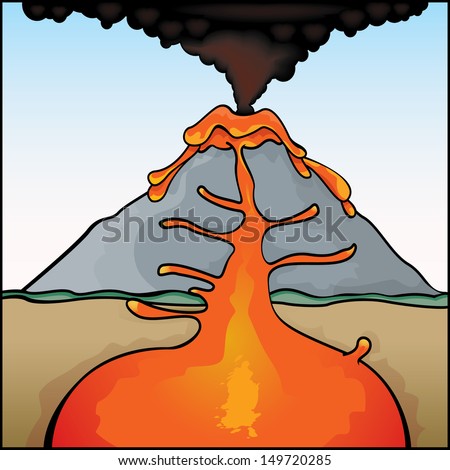
Volcanic Eruption: a disaster in which volcano releases gas, lava, and volcanic bomb. Volcanic eruption is caused by decompression of gas and magma-building process deep inside the Earth.
Drought is a abnormally prolonged dry season in which land loses water, causing damage to agriculture and ecosystem.
As the name describes itself, natural disaster is damaged cause by NATURE. However, HUMAN can actually worsen the situation, fostering the development of natural disaster. Blogger Ben Dennison highlighted six cases of human-made "natural" disasters. Here are example 3 cases from those 6.
#1 The Draining of Lake Peigneur 
in 1980, a group of ignorant drillers dug a whole on the salt mine, creating a whirlpool. Fortunately, no one died.
#2 The Boston Molassacre
In 1919, a molasses tank leaked. However, the worker ignored it. As the fermentation carried on, carbon dioxide began to build up. Under pressure, rivets eventually shot out of the tank, resulting in a disaster.
#3 Vajont Dam
In 1963, due to the stubborn ignorance of SADE (an Italian energy company) who built a massive dam, the dam was broken by landslide and rain, creating 750 foot-tall wave that wiped out the villages of Erto and Casso.
These 3 case are disasters that were caused by human stupidity and damaged as much as a natural disaster could do. As the famous Einstein said, "two things are infinite: the universe and human stupidity".
Well said, Einstein!
So, how can people stop or at least alleviate "natural" and "human made" disasters?
For natural disaster, we cannot stop it since we do not actually "cause" it. However, we can reduce the damage in several ways:
1. Staying away from disaster-prone areas. It is common sense: people see danger, people run away.
2. Preparing for the disasters. It is obviously stupid to live in places where disasters definitely occur. However, sometimes, we don't have choice. For example, Vietnamese who live in middle of the countries have nowhere else to go. It is their homeland where they are born. Therefore, to survive in such a place of flood, they must have some ways to protect themselves. For instance, they built lake to contain extra water from flood season to use later in dry season. Also, they are used to the flood, therefore survive easily: it's the amazing gift of adaptation!

For disasters caused by human stupidity, well, what is the solution? Get smart, I guess...