Thursday, September 25, 2014

Technology - A step to innovation or destruction?

What does technology actually mean? According to Cambridge American Dictionary, technology is "the method for using scientific discovery for practical purpose". In other words, technology is the use of science to serve human needs (communication, comfort, security, etc.) So is the advance of technology good? Not really.
Advanced technology is a sign for human intelligence AND human laziness. People who are born with car, computers, microwave oven, instant food, etc. tend to be lazier than people who are not. If you have a car, what is the point of walking? If you can have food instantly, what is the point of cooking for hours? "Use it or loose". People start losing their abilities due to laziness. Walking helps strengthening legs muscle. Cooking is an important skill for surviving because food is not always there. And example is the movie "Wall-E". The chatting language also affects human writing skills by shortening words and sentences. As technology evolves, humans degrade.

Advanced technology creates more dangerous problem. Nuclear war is a result of advanced science. Internet piracy is a result of advanced computer science. Extremely dangerous new viruses are results of failure experiments in advanced medical science. As technology evolves, dangers evolve.

What are the solutions? The problems are not about how advanced technology is. The actual problems are about how HUMANS use technology. The "solutions" are not specific, but rather determined on the purpose of using technology and the reliance on technology. If we can use technology for constructive purposes and minimize the reliance on technology, there will be no "problems".

Monday, September 15, 2014

Piracy

Piracy is the act of robbery and stealing.
Most people see pirates as sea robbers.
Pirate in the past
Pirate in presence
When the Internet is spreading out, there is a new type of pirates created. Internet piracy is the use of works protected by copyright without permission, harming the right of copyright holders.

So why is privacy important issues? How would you feel if one day all the private data in your laptop were published on the Internet? How would a musician feel if his work, which requires tons of hours working and creativity work, was given for free? It's like the situation in which someone sneaks in your house, steal your TV, and gives it away for free. Piracy, or stealing in general, is not good for whatever reasons.
What are the solutions?
1. Let the customers decide to whether pay or not. If the customers find the product worth to pay, they will pay anyway.
2. Reduce the price of the products.

As you see above, those solutions are not for direct prevention, instead discouragement to Internet privacy. Privacy cannot be stop directly, for pirates will find their way no matter how many barriers there are. The only way to stop Internet piracy is eliminating the motivation of piracy.

Friday, September 12, 2014

Political Spectrum

I don't usually talk about politics. However, I just took Political Compass.
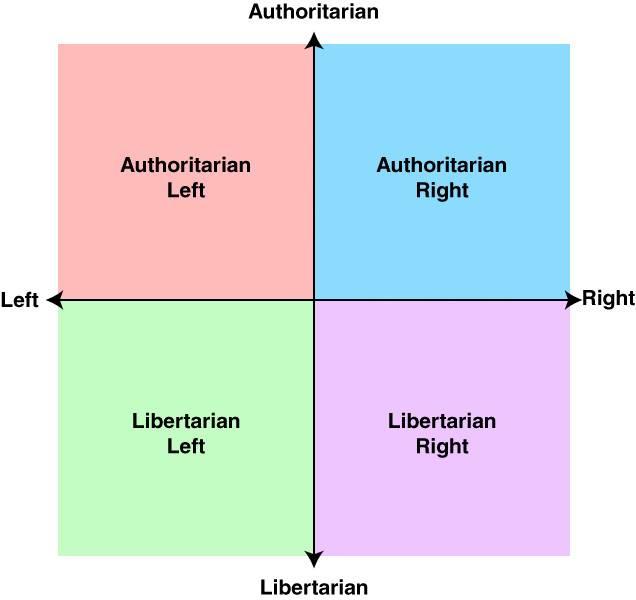
This is a political compass. The horizontal line is economic: from left (communism) to right (liberalism). The vertical line is social scale: from up (fascism) to down (anarchism). The test basically asked me a bunch of multiple choice questions. I had to answer whether "Strongly agree", "Agree", "Don't agree", or "Strongly against". You can do the test yourself.
There are 3 question that my teacher asked me to answer about the test:
1. Do you think the questions are fair and valid?
To some degree, yes. They cover many part in politics (drugs, trade, military, etc.).
2. Do you think that the test gave an accurate representation of the person or character that you entered data for?
Based on my result and how I evaluate myself, I think that the test is accurate.
3. How could this test help to make predictions over how a government or politician will approach a problem? 
Each question in this test gives a clue of how a politician approaches a problem. Just by reading question, one can easily predict what a politician would do if he is in mentioned-situations.

My result: Libertarian Left, a combination of anarchism and communism. I favor social freedom and a well-planned economy.

Tuesday, September 9, 2014

Income Inequality

Do you know that the world's 300 Richest have more than 300,000,000 Poorest?
Do you know that the bottom 80% of population own 6% of global wealth?
How much money do you earn a year? $1,000,000? $100,000? $10,000? $1,000? Or none at all?

Having been around since ancient time, income inequality is becoming a global issue. Some people tend to earn more money than others. Why, since "all men are equal" is stated clearly in The US Independent Declaration?

One ancient example of income inequality is the system of empire: The emperor live based the work of his people. This kind of employer-employee model has been spread out over time.
The European colonialism since 15th century is another form of employer-employee model. During The Scramble for Africa (1876 - 1914), Europeans used African workers as cheap labors and maximized the use of natural depletion. As a result, empires became stronger overtime, and restrained the development of African countries. The colonialism, although it ends, still leaves a long-term effect on Africa - African countries are still behind European countries nowadays.
Personally, I do not think that there is an specific cause for income equality. Life is not fair, and it will never be. There are some people who are more fortunate than others. Since there is no actual cause, no long-term solution works. With that being said, people, however, can do something.

1. Tax: Rich people get taxed more than poor people do.
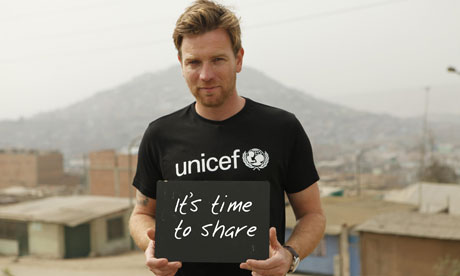
2. Donation: If one wishes, he can donate for charity (GoFundMe, UNICEF, etc.)
Those 2 solutions cannot completely solve the puzzle of income inequality, but at least alleviate the situation.
:)

Thursday, September 4, 2014

Healthcare-Related Organization

I. World Healthcare Organization (WHO)

What is World Healthcare Organization?
"WHO is the directing and coordinating authority for health within the United Nations system. It is responsible for providing leadership on global health matters, shaping the health research agenda, setting norms and standards, articulating evidence-based policy options, providing technical support to countries and monitoring and assessing health trends."
WHO 
History of World Healthcare Organization? 
"When diplomats met to form the United Nations in 1945, one of the things they discussed was setting up a global health organization. WHO’s Constitution came into force on 7 April 1948 – a date we now celebrate every year as World Health Day"
WHO
What has World Healthcare Organization done?
"WHO has played a very pivotal role in setting health policies, as well as providing technical cooperation to its member states. Life expectancy rose from 48 years in 1955 to 69 years in1985. ...the infant mortality rate fell from 148 per 1000 live births to below 59 per 1000. Population growth has been slowed dramatically .... Smallpox, the ancient scourge, has disappeared. ...control of lice-borne typhus and yaws. Polio and guinea worms are on the verge of total elimination. A number of other communicable and tropical diseases, ... are in retreat. With universal salt iodization in place, the prospect of virtually eliminating iodine deficiency disorders (IDD), the major cause for brain damage among young children, is also in sight."


II. United Nations International Children's Emergency Fund (UNICEF)
What is United Nations International Children's Emergency Fund?
"UNICEF is the driving force that helps build a world where the rights of every child are realized. We have the global authority to influence decision-makers, and the variety of partners at grassroots level to turn the most innovative ideas into reality.  That makes us unique among world organizations, and unique among those working with the young. "


"UNICEF was created with this purpose in mind – to work with others to overcome the obstacles that poverty, violence, disease and discrimination place in a child’s path. "
UNICEF
History of United Nations International Children's Emergency Fund? Read more from Timeline.
"In 1953, UNICEF becomes permanent part of the UN.
The UN General Assembly extends UNICEF’s mandate indefinitely. UNICEF begins a successful global campaign against yaws, a disfiguring disease affecting millions of children, and one that can be cured with penicillin."
UNICEF

What has United Nations International Children's Emergency Fund done?
"One area in which UNICEF has made great strides to help children is in the prevention of disease. Each year worldwide, millions of children die of preventable illnesses such as malaria, cholera, pneumonia and the measles. The organization has worked to provide children with vaccines against many illnesses. It has also helped to provide communities with safe drinking water."
"UNICEF has worked not only to improve the education of women and girls, but also to educate boys and men on the importance of gender equality and empowering women to make household decisions. By helping to educate women and reduce gender discrimination, the organization has been able to help children, since women are their primary caregivers."
How to support United Nations International Children's Emergency Fund?
One can support UNICEF by going to its website and donating through credit card.


So, above are the information about WHO and UNICEF that I've taken from many sources (linked). Why am I even doing this? I am working on a project that I am very concerned with - Healthcare. The information above gives me an overview of what people around the world are doing right now, and what I can do to help them.


Thursday, August 28, 2014

You are not alone

You are not the only one living in this universe. You are not the only one living in Solar system. You are not the only one living in the Earth. You are not the only one living in your country.
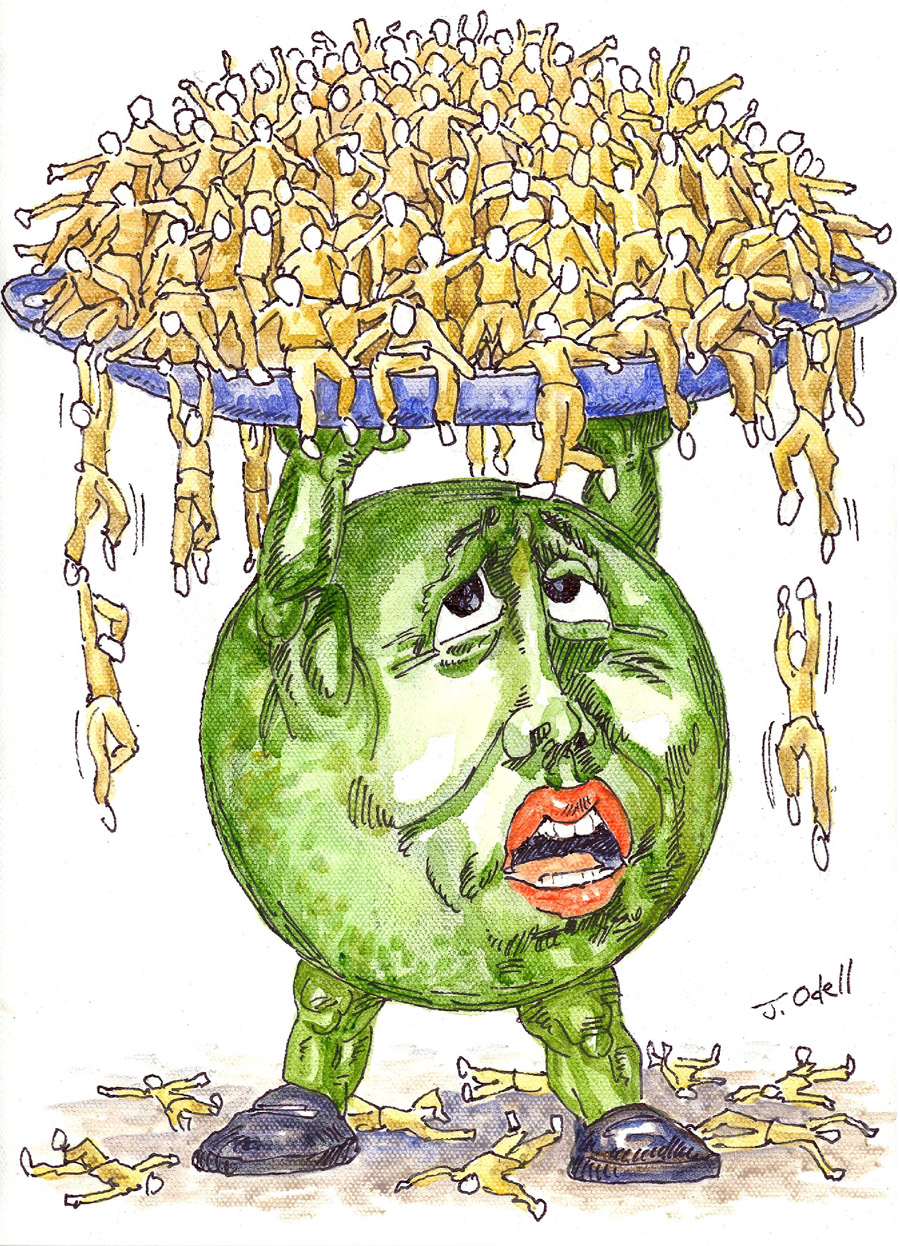
Human population is increasing every day, every hour, every minute, every second. We are getting more crowed overtime. Eventually, the increase of population is no more beneficial, instead, becomes a problem called OVERPOPULATION.
Many articles have been published and discussed. These are 3 articles that basically have the same idea:
http://www.conserve-energy-future.com/causes-effects-solutions-of-overpopulation.php
http://www.huffingtonpost.com/alon-tal/overpopulation-is-still-t_b_3990646.html
http://www.buzzle.com/articles/causes-of-overpopulation.html

In short, there are 2 causes for overpopulation: Advance in technology and Lack in family planing. Advance in technology, such as medical facilities, decreases death rate, keeping people live longer and healthier. Lack in family planing means that parents have children in a "spontaneous" way, without any plan, rapidly increasing birth rate. These 2 factors together increase the total population.
Effects of overpopulation are obvious: depletion of natural resources, pollution to environment, massive unemployment, etc.
Some solutions are improvement in (sex) education, family planning, tax, etc.
Those ideas are obvious, and people talk about them over and over, right? What truly makes me think, however, is the idea presented in this article:
https://www.fightaging.org/archives/2006/09/overpopulation.php
This article really brings out a completely new and interesting about overpopulation. The author states that advance in technology and wealth will actually reduce birth rate. For example, in Japan, the population growth rate is negative. They have machines that can replace workers; therefore, they do not need to have more children since they have enough wealth, and also giving birth is the most difficult task (you know what I mean). The second point the author makes is that the Earth is capable to support ten billion people. That argument, to me, is quite weak: just because the Earth is capable, we do not have to push to the limit. The third point is that natural resource depletion is a result of corruption, ignorance, and greed. This is true to some degree. What bother me is that to fight against corruption, ignorance, and greed (which are human natures), we need better education, which cannot be provided efficiently with a large number of people. Overpopulation, therefore, has a indirect relationship with the depletion of natural sources.
Above are both sides of a coin named overpopulation. It's up to you to decide your belief. It is fine if you see overpopulation is not a serious issue. However, if you are worried about overpopulation, which I personally predict will get more serious if nothing is done, I gave you the solutions. Be smart...


Thursday, August 21, 2014

Human Needs

We are humans. Humans, like other living things, have certain needs and interests. "What do humans need?" the question has been asked for a long time. There is no absolutely correct answer, for humans are different. However, some general ideas about human needs were introduced.


Maslow's Hierarchy of Human Needs:
Physical Needs—air, food, water, sleep
Safety Needs—security of others and environment
Belonging Needs—connection with others
Esteem Needs—achievement, competence, self-esteem
Self-Actualization Needs—realization of one’s potential comfortable acceptance of oneself and the world 
Rosenberg's Hierarchy of Human Needs:
Physical Nurturing- air, food, water, sleep
Interdependence- trust and dependence
Love Integrity- honesty and loyalty
Autonomy- independence
Play- Entertainment
Celebration and Mourning- emotional support
Spiritual Communication- faith, religion, mental elements
These two hierarchy above are the ones I like the most. Having some similar ideas, they include basic physical needs. Some ideas are the same but stated in different words. For example, Maslow's "Safety Needs" is Rosenberg's "Interdependence" and "Love integrity".

Some differences between those two, in my opinion,  are that Rosenberg sees emotional and spiritual sides with more concern. He cares so much that he separates them into different categories. On the other side, Maslow tries to keep his hierarchy as simple as he can. Although I prefer Rosenberg's, they are both correct.

Knowing these hierarchies, you can understand the causes of many world issues. Have you ever wondered why Africa has the highest death rate (for example, Botswana's death rate is 33.6 per 1000)? Food and Water. Many Africans are not even provided enough fundamental physical needs. Food not provided, many Africans died when they were children.


Another example of lacking basic needs are bullying. According to "No Bullying", one of the main causes of bullying is dysfunctional family. Kids who live without love tend to express more violence. They tries to get the attention from others, which they don't have from their families. As a result, bullies mess around and cause lots of problems related to security.


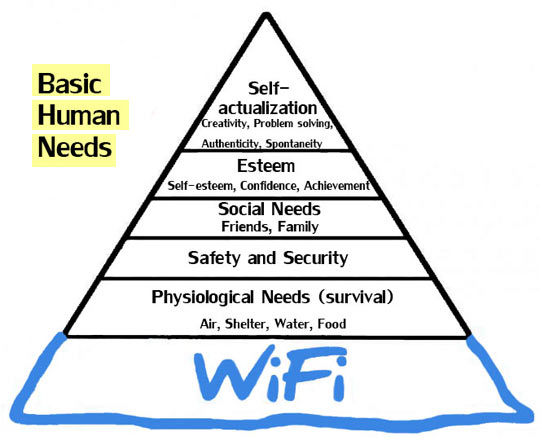
Based on two examples above, we can see that the hierarchies of human needs are pretty correct. I, however, think this is a better one: